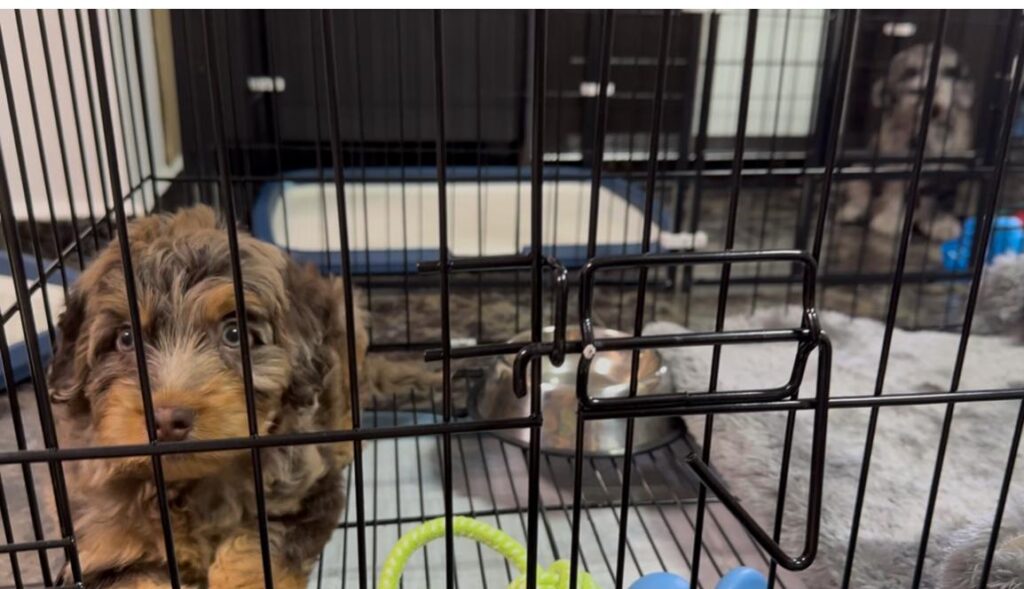

As first-time puppy parents (pawrents), life with Asher & Hunter has been a masterclass in fails and passes of fun lessons, and “what just happened?” moments. Some lessons came from experience, some from glorious trial and error, and many from late-night Googling — but every win (and whoops) taught us something worth wagging about. 🐾 And we are wagging through it all with laughter, love, and a growing list of “next time we’ll know better.” 🐶
Consider this your fun Pawrent Survival Kit — the must-haves and must-knows for life with fur and chaos. The secret scroll of pawrenting: what you need, what you should know, and what your puppy hopes you’ll figure out fast. From treats to tricks — your must-have, must-know guide to keeping tails wagging and sanity intact.
1) Crate Training
Crate training is all about creating a safe den where Asher & Hunter feel secure — not confined. The crate becomes their cozy “home within a home.”
Best Practices:
- Keep the crate comfy with soft bedding and toys — no punishment zones allowed.
- Start with short crate sessions and reward calm behavior.
- Feed them inside the crate so it smells like love and dinner.
- Always end on a positive note — leave them wanting for more crate time.
- Some trainings and plays with puppy are carried out in the crate too.
- Keep them mentally engaged with toys or puzzle feeders.
2) Pee Pad Training
Teaching the boys where to do their business saves your floors — and your sanity. Consistency and timing are the real heroes here.
Best Practices:
- Place pee pads in the same spot — dogs love routine
- Bring them to the pad right after meals, naps, and playtime.
- Reward success with treats and praise.
- Gradually move the pad closer to the toilet door or main door for toilet or outdoor transition later.
3) No Barking
Golden doodles are expressive — but teaching when not to bark is key. It’s about calm confidence, not scolding.
Best Practices:
- Identify the cause — boredom, fear, excitement?
- Use quiet cues like “shh” or shaking a bottle with coins and says “quiet” reward silence instantly.
- When puppy barks, it takes a lot not to walk to him. But, you must not reward barking by going to him.
- When he barks, face your back to him and walk further away if he continues to bark. Go nearer when he stops and go back to praise him when he stops barking.
4) Cleaning the Pee & Poo
Accidents happen — and that’s okay! The secret lies in cleaning it right so the smell doesn’t say, “Hey, let’s do that again!”
Best Practices:
- Use enzymatic cleaners to neutralize odors (not just mask them).
- Avoid ammonia-based products — they smell like pee to dogs.
- Clean immediately for best results.
- Stay calm and kind — accidents are part of puppyhood.
5) The Tear Drops
Those adorable puppy eyes can get teary from allergies, blocked ducts, or grooming issues. Keep them clean and sparkling!
Best Practices:
- Wipe gently with a damp cotton pad daily.
- Use tear stain removers if needed (vet-approved).
- Keep fur around the eyes trimmed short.
- If eyes stay red or watery, check with the vet.
6) The Ear Drops
Doodles’ floppy ears love to trap moisture — making regular ear care a must. Clean ears mean happy head tilts!
Best Practices:
- Clean weekly with vet-approved ear cleaner.
- Gently wipe visible dirt — never poke deep!
- Keep ears dry after swimming or baths.
- Watch for scratching or odor — signs of infection.
7) The Flea
Tiny, jumpy freeloaders that no pup invited. Prevention is key — not scratching after the fact.
Best Practices:
- Use monthly flea prevention (topical or oral).
- Regularly wash bedding and toys.
- Comb their coat weekly to check for “flea dirt.”
- Treat your home and yard if you ever spot one.
8) Tricks and Treats
Training time is bonding time! Treats turn lessons into games — and doodles love applause (and snacks).
Best Practices:
- Keep sessions short — 20 minutes max for young pups.
- Use small, soft treats for quick rewards.
- Start with simple commands: sit, stay, down, come.
- Always end with a win and a wag.
9) Bathtime
Bathtime can be a splashy affair, but with patience, it turns into puppy spa day!
Best Practices:
- Use gentle puppy shampoo (tear-free).
- Test water temp — warm, not hot.
- Keep treats handy for positive reinforcement.
- Dry thoroughly — especially the ears and paws.
10) Grooming
Golden doodles’ coats are made for cuddles — and tangles. Regular grooming keeps them fluffy, clean, and camera-ready.
Best Practices:
- Brush 3–4 times a week to prevent matting.
- Use a slicker brush or dematting comb.
- Schedule professional grooming every 6–8 weeks.
- Check nails, eyes, and ears at each session.
11) Vaccination
Vaccines keep Asher & Hunter safe from preventable diseases. Think of it as their superhero shield.
Best Practices:
- Follow your vet’s vaccination schedule strictly.
- Keep records in a pet health folder.
- Avoid dog parks until vaccinations are complete.
- Annual boosters are just as important as the first shots.
12) Health Check-Up
Regular vet visits mean early detection, longer cuddles, and peace of mind. Prevention beats panic every time.
Best Practices:
- Schedule vet check-ups twice a year.
- Track weight, appetite, and behavior changes.
- Ask questions — no topic is too small.
- Keep up with parasite prevention and dental checks.
13) Insurance
Because life happens — and vet bills can bite harder than fleas. Pet insurance keeps care affordable and stress low.
Best Practices:
- Compare plans for coverage, deductibles, and exclusions.
- Start early — premiums are lower for younger pets.
- Choose a plan that covers accidents and illnesses.
- Keep digital copies of all medical receipts.